

Why Every UAE Business Needs A Competitive Analysis Template

From Dubai's impressive skyline to the bustling markets of Sharjah, the UAE presents a vibrant yet competitive business environment. Thriving here requires more than just offering a great product or service. It demands a deep understanding of your competition. This is where a competitive analysis template becomes essential. It provides a structured way to analyze your competitors' strategies, understand their strengths and weaknesses, and ultimately, chart your own course to success.
Imagine two cafes in Abu Dhabi, both known for their excellent Arabic coffee. One cafe, using a competitive analysis template, discovers its competitor primarily targets tourists. Armed with this knowledge, the first cafe can focus on the local Emirati community, offering specific promotions and loyalty programs. This targeted approach, fueled by competitive analysis, helps the cafe establish a unique niche and cultivate a loyal customer base.
A well-designed competitive analysis template also helps businesses navigate the UAE's unique cultural landscape. Understanding local preferences, religious practices, and social customs is critical for effective marketing and product development. A template guides businesses in gathering and analyzing data related to these cultural factors, ensuring their strategies resonate with their target audience.
Across the Middle East and Africa (MEA), and particularly in the UAE, competitive analysis templates are gaining popularity. Businesses are recognizing the crucial need to understand their market position. The affiliate market, heavily reliant on competitive analysis, was valued at USD 370.24 million in 2024. It's projected to grow at a CAGR of 7.7% between 2024 and 2033. This growth reflects the increasing importance of competitive analysis in the region. Learn more about competitor analysis here.
Benefits of Using a Competitive Analysis Template in the UAE
Using a competitive analysis template in the UAE offers several key advantages:
- Identify Opportunities: Discover untapped market segments that your competitors may be overlooking.
- Strategic Pricing: Make informed pricing decisions based on competitor pricing strategies.
- Targeted Marketing: Craft marketing campaigns that effectively reach your specific audience.
- Product Development: Create products or services that fulfill unmet customer needs.
- Risk Mitigation: Anticipate and address potential challenges with proactive strategies.
Key Components of a Competitive Analysis Template
A robust competitive analysis template should include these essential elements:
- Competitor Identification: Identify your primary competitors, including both direct and indirect rivals.
- Product/Service Comparison: Analyze your competitors' offerings, including features, benefits, and pricing.
- Marketing Strategy Analysis: Examine their marketing channels, messaging, and target audience.
- SWOT Analysis: Assess their Strengths, Weaknesses, Opportunities, and Threats.
- Market Share Analysis: Determine their market share and identify opportunities to increase your own.
By using a competitive analysis template, businesses in the UAE can gain valuable market insights and make informed decisions. This leads to sustainable growth in this competitive market.
Building Your Competitive Analysis Template That Actually Works
Forget generic templates. Let's craft a competitive analysis template that empowers real business decisions specifically within the UAE. We'll explore core components that successful regional companies leverage, from competitor matrices that reveal hidden rivals to pricing comparisons that refine your overall strategy.
Essential Components for UAE Businesses
A robust competitive analysis template needs to incorporate both hard data and qualitative insights. This means designing your template with dedicated sections tailored to the UAE market.
-
Competitor Identification: Begin by pinpointing your primary competitors. This includes direct competitors (those offering similar products or services) and indirect competitors (those addressing the same customer needs with different offerings). A traditional Emirati restaurant, for instance, might consider other Emirati restaurants and modern cafes serving fusion cuisine as competitors.
-
Product/Service Offering: Take a deep dive into what your competitors offer. Analyze features, benefits, and pricing, while keeping local UAE preferences and cultural relevance in mind.
-
Marketing Strategies: Uncover your competitors’ marketing approaches within the UAE. Examine their social media activity, advertising campaigns, and public relations efforts within the region. Identify their target demographics and favored communication channels.
-
SWOT Analysis: Carry out a SWOT analysis focused on your competitors' strengths, weaknesses, opportunities, and threats specifically within the UAE market.
-
Market Positioning: Examine how your competitors position themselves in the UAE. Consider their brand image, target audience, and overall value proposition within the local market.
To better illustrate the power of a well-structured template, let's examine a practical example. The table below, "Core Template Components Comparison," provides a detailed breakdown of the essential elements found in different types of competitive analysis templates, along with their implementation priority. This comparison highlights the varying levels of detail and focus each template type offers.
| Component | Basic Template | Advanced Template | Industry-Specific | Implementation Priority |
|---|---|---|---|---|
| Competitor Identification | High-level overview | In-depth profiles, including indirect competitors | Highly focused on relevant niche players | High |
| Product/Service Offering | Basic feature comparison | Detailed analysis of features, benefits, and pricing | Focus on culturally relevant offerings and local preferences | High |
| Marketing Strategies | Overview of main channels | Deep dive into digital and traditional strategies, including regional campaigns | Emphasis on local marketing trends and channels within the UAE | Medium |
| SWOT Analysis | Basic SWOT matrix | Detailed SWOT with specific UAE market context | SWOT tailored to industry dynamics within the UAE | Medium |
| Market Positioning | General market segment | Detailed analysis of brand positioning and value proposition | Focus on local market perception and cultural nuances | Medium |
As you can see, moving from a basic to a more advanced or industry-specific template allows for a more granular and targeted analysis, yielding richer insights.
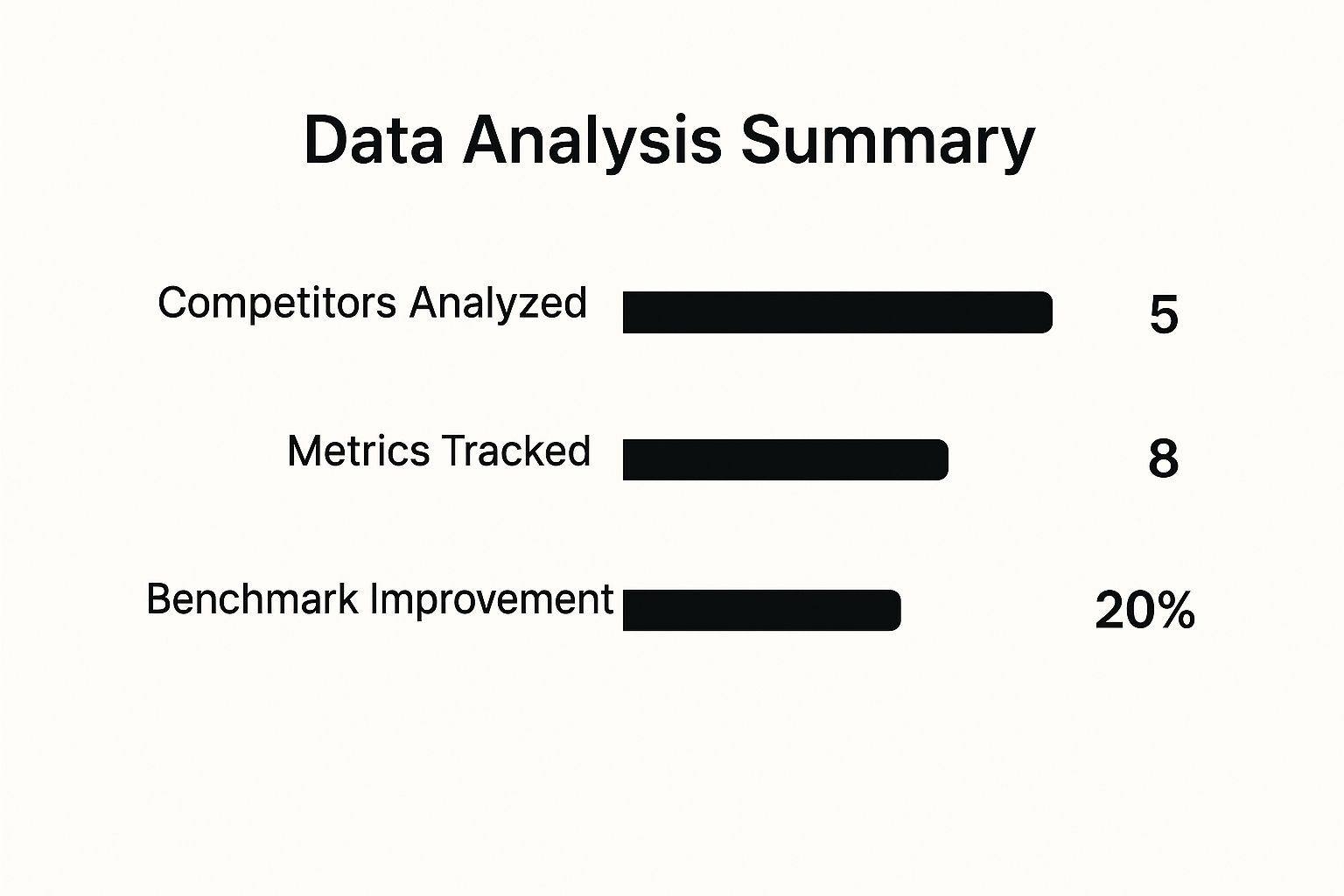
This infographic visually represents data from a sample competitive analysis template, tracking eight metrics across five competitors. The result? A 20% benchmark improvement. This highlights the significant potential of a well-structured template to boost performance. For those interested in further exploring digital strategies, Technogital offers resources on web development for startups.
Customizing Your Template for Different UAE Industries
The UAE's diverse economy demands tailored approaches. An e-commerce business in Dubai requires a different competitive analysis template than a hospitality business in Abu Dhabi. This means adjusting your template’s focus based on industry-specific factors.
-
E-commerce: Prioritize online visibility, digital marketing strategies, pricing competitiveness, and customer reviews.
-
Hospitality: Focus on brand reputation, customer experience, online booking platforms, and local events and tourism trends.
-
Retail: Analyze physical store locations, customer service quality, loyalty programs, and local competitor promotions.
Ensuring Consistent Usage
Finally, ensure your competitive analysis template is user-friendly. A well-designed, accessible template promotes regular use and generates valuable, actionable insights. This translates into identifying opportunities more rapidly and making better-informed decisions, ultimately leading to a stronger competitive edge in the dynamic UAE business environment.
Turning Market Data Into Competitive Intelligence Gold

Building a robust competitive analysis template is the first step. The real value comes from how you populate that template with relevant market data and transform it into actionable competitive intelligence. This process, when done effectively, allows UAE businesses to anticipate market shifts, identify emerging opportunities, and outpace the competition.
Data-Driven Decisions in the UAE Market
In the dynamic UAE business environment, access to reliable, current market information is essential. This involves knowing where to find credible data and how to interpret it within a structured analytical framework.
Understanding the performance of different market segments, for example, offers valuable insights into customer behavior and preferences. This is particularly important in the UAE, given its diverse consumer base and various cultural influences.
Keeping track of industry trends is also key for anticipating changes in the competitive landscape. This allows businesses to proactively adjust their strategies and maintain a competitive advantage.
This means you need more than just general market research. You need specific data related to your industry within the UAE. If you're in retail, for example, you might monitor consumer spending in Dubai and Abu Dhabi, along with evolving retail trends across the Middle East.
Building Your Analytical Framework
A solid analytical framework is crucial for interpreting market data. This framework should be designed for your specific business needs and industry.
- Key Performance Indicators (KPIs): Define the KPIs most relevant to your business goals. This could include market share, customer acquisition cost, customer lifetime value, website traffic, or social media engagement.
- Data Sources: Decide on your data sources. These could include market research reports, industry publications, government statistics, social media analytics tools, or other relevant platforms.
- Data Analysis Techniques: Select appropriate data analysis methods, such as statistical analysis, trend analysis, or SWOT analysis.
- Reporting and Visualization: Determine how you'll communicate your findings. Visualizations like charts and graphs can clarify complex information.
The use of competitive analysis templates in the UAE and the wider MEA region is often informed by detailed statistical market insights. For example, a regional analysis report on the Middle East and Africa affiliate market shows that the largest market segments by type frequently change each quarter, with physical products sometimes representing over 60% of affiliate transactions. Explore this topic further here.
Addressing Data Challenges
Working with market data in the UAE has unique challenges. Data inconsistencies, seasonal fluctuations, and external factors like currency exchange rates can all affect market dynamics. It's important to develop strategies to address these complexities.
One strategy is using data smoothing techniques to handle seasonal variations. If your business sees a sales increase during Ramadan, for example, you can use statistical methods to adjust your data and reveal underlying trends.
Understanding the limitations of your data is also important. Be aware of potential biases and inconsistencies, and verify your findings with multiple sources when possible.
By building a structured analytical framework and understanding potential data challenges, you can transform raw market data into valuable competitive intelligence, empowering your business to thrive in the UAE market.
Integrating Your Template Into Modern Business Operations
A competitive analysis template isn't just a document; it's a dynamic tool that should be woven into your daily business operations. Forward-thinking companies in the UAE are incorporating competitor analysis into everything from their CRM systems to their marketing automation workflows. This allows for real-time insights and data-driven decision-making, which are essential for navigating the competitive UAE market.
Tools and Technologies for Enhanced Analysis
Integrating market data effectively empowers your template to facilitate superior, data-driven decisions. Learn more about data-driven decision-making. Numerous tools and technologies can amplify your template's effectiveness. AI-powered data collection systems automate the often tedious task of gathering competitor information, freeing up your team to focus on analysis and strategy development. Automated competitor monitoring solutions track changes to websites, pricing adjustments, and social media activity. These solutions provide immediate alerts to any notable shifts in the competitive landscape.
Case Studies: Regional Success Stories
A significant trend shaping the competitive landscape in the UAE is the integration of competitive analysis templates into digital marketing and e-commerce operations. In 2024, digital transformation initiatives in the AE region accelerated. Over 70% of major retail businesses now incorporate competitor analysis as a core element of their strategy development. Find more detailed statistics here.
- One major UAE retailer saw a 15% increase in customer retention after integrating its competitive analysis template with its CRM system. This integration provided personalized recommendations and targeted promotions based on what competitors were offering, resulting in increased customer loyalty and lifetime value.
- A Dubai-based e-commerce company achieved a 10% boost in market share. They achieved this by using automated competitor monitoring to strategically adjust their pricing and product offerings.
Practical Challenges and Solutions
Integrating a competitive analysis template does present some challenges. Securing team buy-in is paramount. Demonstrating the template’s value through clear examples and success stories is key to gaining team support. You might be interested in this article about digital marketing for startups. Maintaining data quality at scale presents another hurdle. Implementing strong data validation processes and conducting regular data audits helps ensure your template continues to deliver accurate and reliable information. Assigning clear roles and responsibilities for data entry and analysis is also important. This fosters accountability and promotes data integrity.
Integrating your competitive analysis template effectively into your daily workflow is no longer optional; it’s essential for continued success in the UAE's competitive business environment. By using modern tools and addressing practical challenges, your business can fully utilize the power of competitive analysis to fuel growth and outperform the competition.
Customizing Your Approach For Different UAE Industries

A competitive analysis template provides a strong starting point. But its true value comes from adapting it to the unique characteristics of different industries in the UAE. Whether your business operates in retail, hospitality, fintech, or logistics, tailoring your template is essential. This ensures you're focusing on the metrics that truly drive success.
Industry-Specific Metrics and Considerations
Each industry in the UAE faces its own set of circumstances. A Dubai-based e-commerce business, for example, encounters different hurdles than a traditional retailer in a souk. This means your competitive analysis needs to adapt and zero in on the most relevant information.
-
Retail: Location, pricing, and promotional strategies are key factors in the UAE's bustling retail sector. Your competitive analysis template should gather data on competitor store locations, analyze their pricing models, and keep track of their promotions. Don't forget to consider cultural nuances and local shopping trends as well.
-
Hospitality: Reputation and customer experience are paramount in the UAE's hospitality industry. Focus your template on metrics like online reviews, customer satisfaction scores, and how your brand is perceived. Local events and tourism patterns, which affect occupancy rates, should also be included in your analysis.
-
Fintech: This rapidly changing industry demands a focus on innovation, security, and adhering to regulations. Keep an eye on your competitors' product features, security measures, and compliance with Central Bank regulations.
-
Logistics: Efficiency and reliability are king in the logistics world. Your template should track delivery times, supply chain practices, and the latest technological developments.
Regulatory and Cultural Factors
The unique regulatory and cultural landscape of the UAE also influences competitive analysis. A deep understanding of these aspects is crucial for customizing your approach.
-
Regulatory Considerations: Industry-specific regulations, like advertising standards for pharmaceuticals or data privacy rules for Fintech companies, have a direct impact on the competitive landscape.
-
Cultural Factors: Local culture and customs play a significant role in shaping consumer preferences and buying habits. Businesses catering to Emirati consumers, for instance, should ensure their messaging and products are culturally sensitive.
Customization Strategies for a Competitive Edge
Customizing your template involves more than just picking different metrics. It requires a thorough understanding of the local market dynamics and how your competitors behave within your specific sector.
-
Market Segmentation: Divide the market into relevant segments and tailor your analysis to the unique features of each.
-
Competitor Profiling: Create comprehensive profiles of your main competitors, outlining their strengths and weaknesses within the UAE market.
-
Trend Analysis: Stay ahead of the game by following industry trends, technological advancements, and changes in consumer behavior within the region.
By implementing these customization strategies and understanding the specific challenges and opportunities within your industry, your competitive analysis template will become a powerful tool. It will allow you to gain deeper insights, anticipate market shifts, and make smarter decisions, ultimately giving you a true competitive edge in the dynamic UAE market. This tailored approach empowers businesses to gather more valuable competitive intelligence, predict market fluctuations effectively, and make well-informed choices for sustained success.
Avoiding The Pitfalls That Kill Competitive Analysis Programs
Even the best competitive analysis template can fall short without proper execution. We've seen this happen time and again with businesses in the UAE. This section shares practical lessons from companies that have successfully navigated the complexities of competitive analysis, focusing on team training, data accuracy, and adapting to market changes.
Common Traps to Avoid in the UAE
Several common mistakes can derail competitive analysis initiatives:
-
Analysis Paralysis: Gathering tons of data without a clear plan of action often leads to analysis paralysis. Define your objectives and desired insights from the start.
-
Data Overload: Too much data can be overwhelming. Focus on the most relevant metrics for your industry in the UAE, such as pricing, market share, and customer sentiment.
-
Bias: Unconscious biases can skew your analysis. Implement objective review processes and diverse team perspectives to mitigate this.
Maintaining Accuracy and Relevance
The UAE market is constantly changing. Keeping your competitive analysis up-to-date is crucial.
-
Regular Reviews: Schedule regular reviews, monthly or quarterly, to ensure your data remains current and actionable.
-
Adapt and Evolve: Regularly revisit your competitive analysis template and adjust the criteria to reflect market shifts.
-
Team Engagement: Regular training and communication keep your team engaged and reinforce the value of competitive analysis.
Best Practices for Long-Term Success
Competitive analysis should be an ongoing process, not a one-time project.
-
Training and Development: Invest in training your team to effectively use the competitive analysis template and interpret data.
-
Data Validation: Validate data from multiple sources or using automated tools. This ensures accuracy and consistency.
-
Actionable Insights: Focus on actionable insights that inform business decisions and drive tangible improvements. Check out this resource on business growth strategies.
To help illustrate a practical implementation timeline, consider the following table:
To get a clearer picture of implementing a successful competitive analysis program, the following table outlines a potential timeline with key milestones:
Implementation Timeline and Milestones
| Phase | Duration | Key Activities | Success Metrics | Common Challenges |
|---|---|---|---|---|
| Planning & Setup | 1-2 Months | Define objectives, select team, choose template, identify data sources | Template finalized, data sources identified, team trained | Defining clear objectives, securing buy-in from stakeholders |
| Data Collection & Analysis | 2-3 Months | Gather data, analyze competitor strategies, identify key trends | Comprehensive competitor profiles created, key market trends identified | Data accuracy, maintaining objectivity in analysis |
| Insights & Recommendations | 1 Month | Develop actionable insights, formulate strategic recommendations | Clear, actionable insights generated, strategic recommendations presented | Translating data into actionable insights, securing buy-in for recommendations |
| Implementation & Monitoring | Ongoing | Implement recommendations, monitor results, adjust strategies | Key performance indicators (KPIs) tracked, strategies adapted based on results | Maintaining momentum, adapting to market changes |
This table outlines a possible implementation process. The actual timeline and milestones may vary based on specific business needs. However, focusing on planning, data collection, analysis, implementation, and monitoring is essential for long-term success.
By avoiding common mistakes and embracing these best practices, your competitive analysis template becomes a valuable asset for sustainable growth in the UAE market. This enables informed decisions based on accurate data and relevant insights, positioning your business for success in the dynamic competitive landscape.
Proving Your Competitive Analysis Template Actually Works
A well-crafted competitive analysis template is a powerful asset. But its true value lies in its ability to drive tangible business results in the UAE. This means going beyond simply gathering data. Instead, focus on how these insights translate into improved performance. This section offers practical frameworks for gauging your template's effectiveness and ensuring it delivers real business value.
Defining Key Performance Indicators (KPIs)
The first step in demonstrating your template's worth is defining clear Key Performance Indicators (KPIs). These KPIs should be directly linked to your overall business objectives. They should also be tailored to the specific dynamics of the UAE market.
-
Improved Market Share: Are you gaining ground on competitors within the UAE? Monitor changes in your market share after implementing insights from your competitive analysis.
-
Enhanced Customer Acquisition: Has your customer acquisition cost decreased? Has your conversion rate improved? These metrics can reveal if your competitive strategies are attracting more customers.
-
Increased Customer Lifetime Value: Are your customers staying longer and spending more? This signifies a strong competitive position. Understanding competitor loyalty programs can inform your customer retention strategy.
-
Faster Decision-Making: Are you making strategic decisions more efficiently? A well-designed competitive analysis template provides the data you need to act decisively in a fast-paced market.
Tracking and Measuring Impact
Once you've established your KPIs, you need to track them consistently. Measure the impact of your competitive analysis insights. This means establishing baseline metrics before implementing any changes. Then, compare performance after implementing strategies based on your analysis. For instance, if you modify your pricing strategy based on competitor data, track its effect on sales and profitability.
Creating Feedback Loops
Continuous improvement is key. Set up feedback loops to collect input on your template's effectiveness. Regularly ask your team for feedback. Do they find the template useful? Are the insights actionable? Are there areas for improvement? This feedback helps refine your template and ensure it stays relevant in the dynamic UAE market. Consider learning how to stay ahead of the competition in digital marketing to avoid potential problems.
Adapting to Market Shifts
The UAE business landscape is constantly changing. Regularly review and update your template. This will allow you to stay ahead of market shifts. Are your analysis criteria still relevant? Are you tracking the right competitors? Are there new competitors to consider? This proactive approach ensures your competitive intelligence stays sharp.
Aligning With Business Objectives
Your competitive analysis template should align with your business objectives. Regularly review your template to confirm it supports your strategic goals. Are you focusing on the correct metrics? Are you gathering the data needed for informed decisions? By consistently adjusting your approach, your competitive analysis efforts will contribute directly to your success in the UAE.
Ready to improve your digital presence and outperform the competition? Visit Technogital F.Z.C to see how our digital marketing solutions can transform your business in the UAE.